Source Mobile Wire Mesh Container for Storage, Transit, and Warehousing
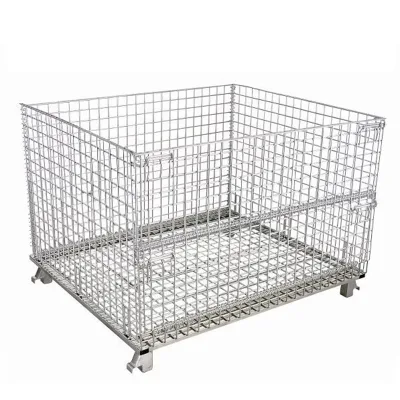
Compare 30 mobile wire mesh container options from verified Chinese manufacturers. Buyers can evaluate specifications like load capacity, mesh spacing, and folding features to find suitable storage solutions for transit and warehousing.
Key considerations
Products List




Comprehensive Sourcing Guide
Strategic Sourcing Guide for Mobile Wire Mesh Containers
The global supply chain relies heavily on efficient material handling solutions, with mobile wire mesh containers emerging as a critical asset for warehousing, logistics, and manufacturing sectors. These units combine the structural integrity of steel with the visibility and airflow of wire mesh, offering a versatile alternative to solid metal cages or wooden pallets. For procurement professionals, navigating the market requires a disciplined approach to verifying technical specifications, understanding cost drivers, and ensuring supplier reliability. This guide synthesizes available market data to provide a framework for sourcing high-quality mobile wire mesh containers without relying on unverified claims or speculative market figures.
Technical Specifications and Dimensional Variability
The primary challenge in sourcing mobile wire mesh containers lies in the significant variability of technical specifications across different manufacturers. Unlike standardized consumer goods, these industrial assets are often customized to fit specific pallet dimensions, racking systems, or workflow requirements. Based on observed market data, dimensions can range from compact units measuring 800mm by 600mm to larger configurations reaching 1200mm by 1100mm. A critical observation in the current market is the existence of multiple standard size profiles, such as 1000mm800mm, 80010001500mm, and 12080*150mm, indicating that buyers must strictly define their internal spatial constraints before initiating a request for quotation.
Wire diameter is another pivotal specification that dictates the durability and load-bearing capacity of the container. Market observations reveal wire diameters ranging from 5mm to 6.2mm, with specific models citing 5.8mm or 6.0mm as standard. The mesh spacing also varies, with common configurations including 50mm×25mm, 50mm×50mm, and 50x50mm or 50x100mm patterns. These variations directly impact the type of goods that can be safely stored; smaller mesh sizes prevent the loss of small components, while larger spacing may be preferred for airflow in specific agricultural or automotive applications. Buyers should verify the exact wire diameter and mesh spacing for every unit, as these parameters are not uniform across the industry.
Load Capacity and Structural Integrity
The structural integrity of a mobile wire mesh container is defined by its scale and load capacity. The market distinguishes between "Medium Duty" and "Heavy Duty" classifications, a distinction that is crucial for safety and longevity. Observed data indicates that specific models are rated for a load capacity of 1000kg, while others may fall into different categories depending on the wire gauge and reinforcement methods. The welding process is a fundamental aspect of this integrity, with "Full Welding" being a noted standard in high-quality units. This manufacturing technique ensures that the wire intersections are permanently fused, preventing structural failure under dynamic loads during transport.
Feet height is another structural element that influences the container's compatibility with forklifts and pallet jacks. Data points show feet heights ranging from 100mm to 120mm. This dimension determines whether the container can be easily lifted by standard equipment without obstruction. Furthermore, the material composition is typically Q235 Steel, though some specifications mention Galvanized Wire or Stainless Steel Wire for the mesh itself. The choice of material affects corrosion resistance, which is a vital consideration for operations in humid environments or outdoor storage. Procurement teams must ensure that the specified material matches the environmental conditions of the intended application to avoid premature degradation.
Customization, Folding Mechanisms, and Packaging
One of the most significant advantages of mobile wire mesh containers is their potential for customization and space-saving features. The market offers "Foldable" designs, which allow the containers to be collapsed when empty, significantly reducing return shipping costs and storage footprint. This feature is particularly valuable for logistics networks that involve one-way shipping or shared container pools. Customization is widely available, allowing buyers to tailor dimensions, mesh patterns, and even the inclusion of dividers or locking mechanisms. The "Customized" attribute is a standard offering, meaning that off-the-shelf solutions may not always meet specific operational needs.
Packaging methods vary by supplier and order volume, impacting the condition of the goods upon arrival. Observed packaging options include Stretch Wrap, Carton, Custom Packaging, Carton and Plastic Seal, and Bundles. For large orders, Pallet packaging is also a common method to ensure stability during transit. The choice of packaging should align with the buyer's receiving capabilities and the fragility of the product. Additionally, the product origin is consistently noted as China, with specific manufacturing hubs like Anping identified as a key production center. While the origin is a known fact, buyers should verify the specific factory location to ensure logistical feasibility and to assess the supplier's proximity to major shipping ports.
Cost Drivers and Pricing Dynamics
Understanding the cost structure of mobile wire mesh containers is essential for budgeting and negotiation. The observed price range in the market is extensive, spanning from 8 USD to 900,000 USD. This vast disparity is not indicative of a single product type but rather reflects the difference between small, simple units and large, highly customized industrial systems. The price is heavily influenced by the weight of the steel, the complexity of the welding, the type of finish (galvanized vs. painted), and the degree of customization.
Minimum Order Quantity (MOQ) is another critical cost driver, with observed ranges from 1 to 300 units. Buyers seeking small quantities may face higher per-unit costs or limited supplier options, whereas bulk orders can leverage economies of scale. The scale of the operation—whether Medium Duty or Heavy Duty—also correlates with price, as heavier gauge wire and more robust welding increase material and labor costs. Buyers should request detailed cost breakdowns that separate material costs from labor and tooling fees to understand the true value proposition of a supplier's quote.
Supplier Evaluation and Quality Assurance
When evaluating suppliers for mobile wire mesh containers, verification of production capabilities is paramount. The consistent mention of "Made in China" and specific origins like "Anping, China" suggests a concentrated manufacturing base. Buyers should verify that the supplier has the capacity to produce the specific wire diameter and mesh spacing required. The presence of specific product models, such as "yg-1120," "T01," "HS-C011," and "LS-WMC," indicates that suppliers often have established model lines, but these should be cross-referenced with the buyer's technical requirements.
Quality control should focus on the welding integrity and the consistency of the mesh. Since "Full Welding" is a noted standard, buyers should request visual evidence or third-party inspection reports confirming that welds are continuous and free of defects. The application of the containers, whether for storage or transit, dictates the necessary quality standards. For applications involving heavy loads, the verification of the 1000kg load capacity claim is essential. Buyers should also inquire about the warranty terms, as a standard 1-year warranty is observed in the market, providing a baseline for post-purchase support.
Long-Term Procurement and Application Strategy
The long-term success of a mobile wire mesh container program depends on aligning the product with specific use cases. The observed applications include storage, transit, and general cage usage. The versatility of these containers allows them to be used in diverse industries, from automotive parts storage to food processing. However, the choice of mesh material, such as Galvanized Wire or Stainless Steel Wire, must be matched to the chemical and physical environment of the storage area.
Procurement strategies should also consider the lifecycle of the container. Foldable designs offer significant long-term savings in logistics, but the folding mechanism must be robust enough to withstand repeated cycles of expansion and contraction. Buyers should evaluate the supplier's track record with similar models and request references from clients with comparable operational scales. By focusing on verified technical data, clear customization options, and robust quality assurance processes, buyers can secure a supply chain that supports efficient and safe material handling operations.
Comparative Analysis of Key Specifications
To assist in the decision-making process, the following table summarizes the key technical variations observed in the market. This comparison highlights the diversity of options available and underscores the necessity of precise specification matching.
| Specification Category | Observed Range / Options | Critical Verification Point |
|---|---|---|
| Dimensions | 800x600x640mm to 1200x1100x1100mm | Match internal racking or pallet dimensions |
| Wire Diameter | 5.0mm to 6.2mm | Verify load capacity requirements |
| Mesh Spacing | 50x25mm, 50x50mm, 50x100mm | Ensure small parts are contained |
| Load Capacity | Up to 1000kg (Heavy Duty) | Confirm with structural test data |
| Feet Height | 100mm to 120mm | Check forklift clearance requirements |
| Welding Type | Full Welding | Inspect for structural continuity |
| Material | Q235 Steel, Galvanized, Stainless | Assess corrosion resistance needs |
| Foldability | Folded / Foldable | Calculate return shipping savings |
| MOQ | 1 to 300 units | Align with inventory budget |
In conclusion, sourcing mobile wire mesh containers requires a meticulous approach to specification verification. By focusing on the tangible attributes of wire diameter, mesh spacing, load capacity, and welding quality, buyers can navigate the complex market landscape effectively. The availability of customization and foldable designs offers significant operational flexibility, but these benefits must be balanced against the specific technical requirements of the application. Through rigorous supplier evaluation and adherence to verified standards, procurement teams can secure durable, efficient, and cost-effective storage solutions that enhance overall supply chain performance.
FAQs
What is the typical load capacity for heavy duty mobile wire mesh containers?
Heavy duty models typically support a load capacity of 1000kg. This capacity depends on the specific wire diameter and full welding construction used in the unit.
Can these containers be customized for specific storage needs?
Yes, customization is available for dimensions, mesh patterns, and structural features. Buyers can request tailored solutions to fit specific pallet sizes or workflow requirements.
Which wire diameter options are commonly available for these cages?
Common wire diameter options range from 5mm to 6.2mm. Specific models may feature 5.8mm or 6.0mm wire to ensure adequate durability and load-bearing strength.
How do foldable designs benefit logistics operations?
Foldable designs allow containers to collapse when empty, significantly reducing return shipping costs and storage footprint. This feature is ideal for logistics networks involving one-way shipping.
What is the standard warranty period for these storage cages?
The standard warranty period observed in the market is 1 year. This provides a baseline for post-purchase support regarding structural integrity and manufacturing defects.
Which materials are used for the mesh in these containers?
Mesh materials typically include Galvanized Wire or Stainless Steel Wire. These options provide necessary corrosion resistance for operations in humid environments or outdoor storage areas.